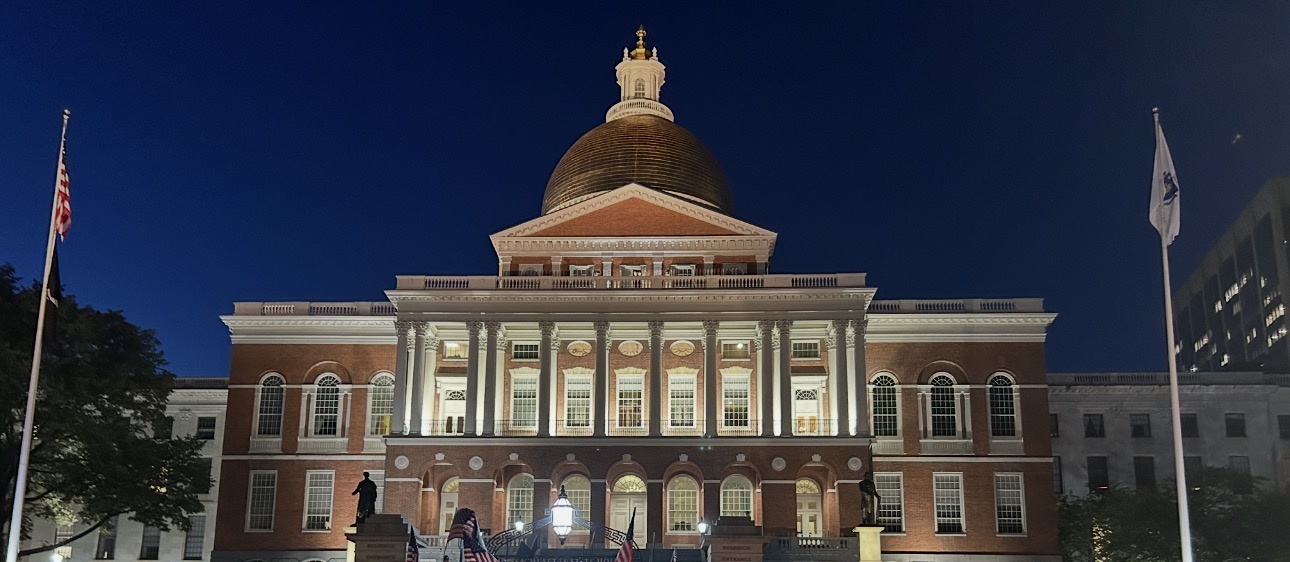
MBTA Communities ActCost Impact Report
A comprehensive analysis of specific and direct costs imposed on 177 Massachusetts municipalities under MGL c. 40A Section 3A.
The Scale of Unfunded Mandates
Total unappropriated costs calculated using DCAMM's Cost Estimating Manual
Multi-family housing units mandated across all affected communities
No funds allocated when the mandate was enacted, violating MGL c 29§ 27C
Communities required to comply with mandatory zoning changes
Cost Impact Summary
Budget calculations based on Designer Base Fees from DCAMM's Cost Estimating Manual. Does NOT include additional infrastructure costs.
Budget Summary
Calculation Assumptions
This report used extremely modest assumptions to calculate a minimum cost impact.
Context: State leaders created the "Home for Everyone" initiative with a goal of producing 220,000 new housing units over the next 10 years. According to the Healey Administration, the 3A mandate has already added 4,000 units in the pipeline with an additional 340 units required by the zoning mandate.
Find Your Community
Select your municipality to see the estimated Designer Base Fees and unit requirements under the MBTA Communities Act mandate.
Select a municipality above to view its estimated costs.
Key Court Decisions
Milton Lawsuit Decision
February 2024The Court held the MBTA Communities Act is valid under Massachusetts law. However, the court ruled that EOHLC's implementation guidelines were promulgated in violation of the Administrative Procedure Act (APA) and were legally ineffective.
Collective Lawsuit (Plymouth Superior Court)
June 2025Justice Mark Gildea determined that infrastructure costs alleged by municipalities were 'anticipated possible costs' and indirect. The Court concluded municipalities had 'merely alleged speculative averments' but left open what 'specific' and 'direct' costs would qualify.
Town of Middleborough Settlement
2024Middleborough successfully negotiated compliance by expanding its existing 40R zoning district, which allows for more compact, mixed-use, walkable developments near downtown and public transportation.
Legal Definition of Direct Costs
"Direct costs of a state mandate refer to the financial obligations imposed on cities or towns by statutes, rules, or regulations. These costs are exclusive of incidental local administration expenses."
— City of Worcester v. Governor, 416 Mass. 751; Lynn v. Rate Setting Com., 21 Mass. App. Ct. 576
Lexington v. Commissioner of Education
MGL c 29§ 27C requires funding be provided at the same time the state's mandate creates a new financial burden imposed on cities and towns. Thus, 3A funding should have been appropriated by the state in 2021 to be a "funded mandate." The 2021 fiscal budget for the state does not allocate any funds to 3A.
How Costs Were Calculated
Cost calculations are based on financial costs the state has accepted as directly related to pre-development of residential projects.
Calculation Process
Utilized the Development Continuum to categorize direct and specific costs related to MBTA Communities Act development costs
Used the 3A mandate requirements to estimate construction costs to fulfill the required unit count for each community
Used DCAMM's Designer Base Fees schedule to calculate total designer costs for each municipality
Double-checked assumptions and calculations by reviewing recently completed construction projects in each municipality
Primary Sources
DCAMM Cost Estimating Manual
Division of Capital Asset Management and Maintenance fee schedules
Development Continuum
State-sponsored framework for pre-development stages and categories
MBTA Communities Catalyst Fund
Infrastructure costs definitions from FY2025-2029 Capital Investment Plan
Recognized Direct Cost Categories
Community Activation & Placemaking
- Design (sign and façade program, streetscape design concepts)
- Economics of Downtown (market reviews, feasibility studies)
- Housing (plans, market analysis, zoning recommendations)
- Downtown mobility (parking management, transit analysis)
Site Preparation
- Site Due Diligence & Market Study
- Site Plan Design & Civil Engineering
- Pre-Permitting/Permitting
- Demolition & Site Acquisition
- Construction of site-related upgrades
Infrastructure
- Design and engineering of infrastructure projects
- Roadway/streetscape improvements
- Bridge/culvert repair or replacement
- Water/sewer infrastructure
- Public utility projects (gas, electric, etc.)

This report was prepared by Anne Brensley
Anne is a Wayland Selectwoman and the Republican Candidate for Lt. Governor.
You can learn more about Anne by visiting Anne2026.com
Let's Work Together
If you are a leader in an MBTA Communities Act designated municipality and would like to include infrastructure costs into this report, please reach out so we can add that information to this report.
Contact UsReport Purpose
- 01A guide to what "specific" and "direct" costs should be reimbursed by the state
- 02A cost calculation of Designer Base Fees that should have been appropriated at the time of the mandate
- 03An opportunity to understand acceptable infrastructure costs for MBTA Communities Act projects
Disclaimer: This report does not purport to give legal conclusions regarding whether the MBTA Communities Act is a funded or unfunded mandate. However, it does aim to serve as a report usable for legal arguments. This report can be updated periodically to include additional infrastructure costs municipalities may identify.